
Introduction
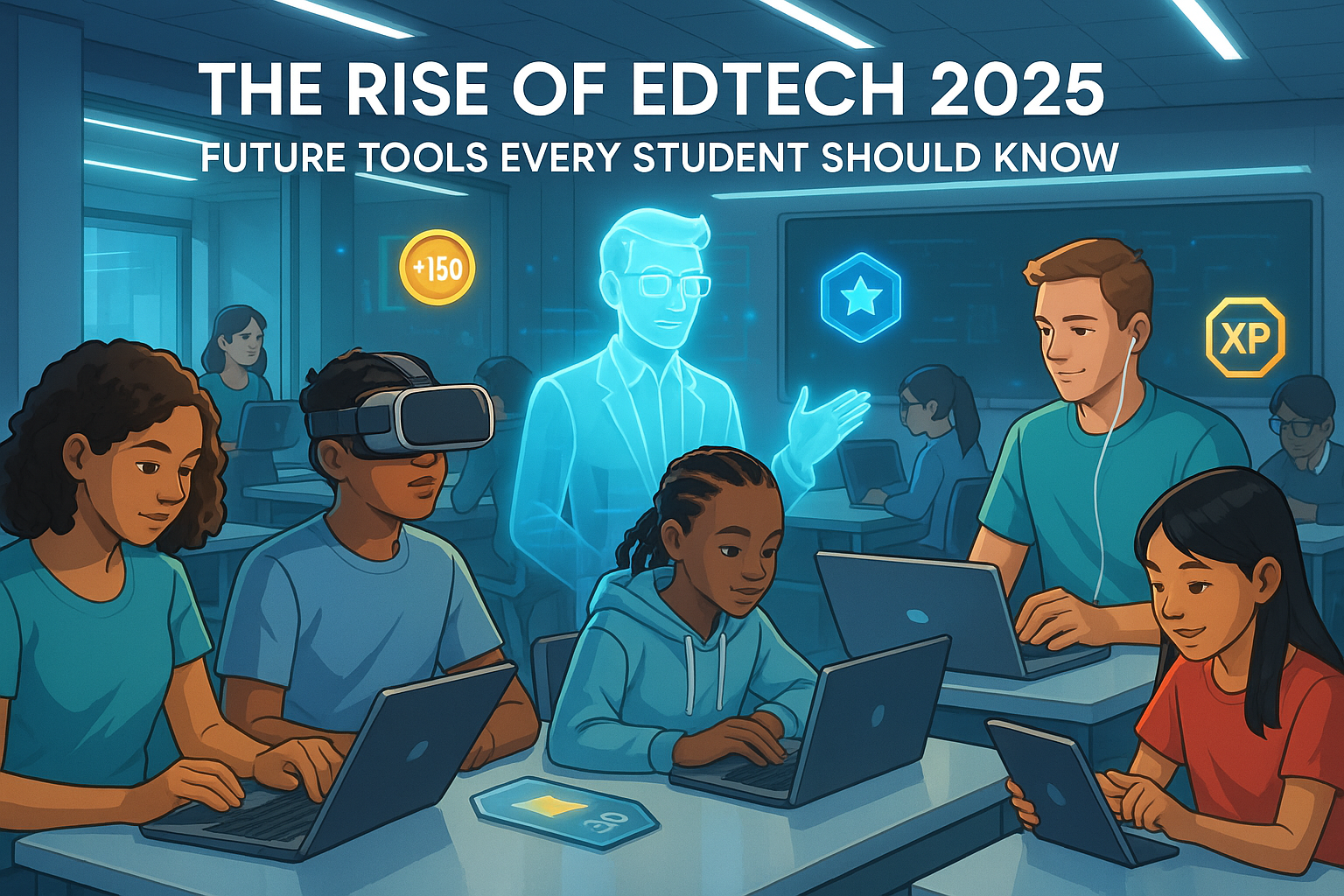
Education is evolving faster than ever. Traditional classrooms are no longer the sole venues for learning. The rise of Educational Technology (EdTech) is transforming how students access information, collaborate, and acquire skills. From AI-powered learning platforms to virtual reality classrooms, EdTech tools are reshaping the student experience in 2025.
In this blog, we’ll explore the rise of EdTech, its key benefits, must-know tools, and how students can leverage them to maximize learning outcomes.
1. What Is EdTech?
EdTech, or Educational Technology, refers to the use of digital tools and innovations to enhance teaching and learning. It includes software, apps, platforms, and hardware designed to make education more interactive, personalized, and accessible.
Key Features of EdTech:
- Online learning platforms
- Interactive lessons with multimedia content
- AI-driven personalized learning
- Gamification and virtual reality experiences
- Collaborative tools for peer interaction
EdTech bridges the gap between traditional teaching and modern learning needs, catering to diverse learning styles.
2. Why EdTech Is Becoming Essential
Benefits for Students:
- Personalized Learning: AI platforms adapt lessons to individual pace and learning style
- Flexibility: Learn anytime, anywhere—ideal for remote or hybrid education
- Engagement: Gamification, quizzes, and interactive simulations make learning fun
- Skill Development: Tools teach not only subjects but also digital literacy, coding, and soft skills
- Global Access: Students can access top-quality education regardless of location
EdTech is revolutionizing classrooms by making education more accessible, effective, and enjoyable.
3. AI-Powered Learning Tools
Artificial intelligence is at the heart of modern EdTech, offering personalized guidance and adaptive learning.
Examples:
- Sora, Quizlet, and Khan Academy: Personalized practice exercises based on student performance
- ChatGPT and AI tutors: Instant answers, explanations, and study support
- Smart assessment platforms: Analyze progress and suggest areas for improvement
AI-driven platforms enhance comprehension, retention, and efficiency, helping students focus on areas where they need the most support.
4. Virtual and Augmented Reality
Immersive technology is changing how students experience learning:
Applications:
- Virtual labs: Science experiments and simulations in a safe digital environment
- Historical recreations: Travel back in time for history or cultural studies
- Anatomy and biology lessons: Explore 3D models of human organs and systems
- Interactive field trips: Explore museums, ecosystems, or geographical sites virtually
VR and AR make abstract concepts tangible, improving understanding and engagement.
5. Gamification in Learning
Gamification incorporates game elements like points, badges, and leaderboards into education.
Examples:
- Kahoot! and Classcraft: Real-time quizzes and gamified challenges
- Duolingo for languages: Levels, streaks, and rewards encourage consistency
- Prodigy Math Game: Turn problem-solving into interactive adventures
Gamified learning motivates students, increases participation, and makes studying enjoyable.
6. Collaborative Tools for Students
Collaboration is crucial for modern education. EdTech provides platforms for teamwork and peer interaction.
Popular Tools:
- Google Workspace (Docs, Sheets, Slides): Real-time collaboration on projects
- Microsoft Teams and Zoom: Group discussions and virtual classrooms
- Notion and Trello: Project management for assignments and study groups
- Slack and Discord: Academic communities for discussion and resource sharing
Collaboration tools help students learn communication, organization, and teamwork skills essential for the 21st-century workplace.
7. Learning Management Systems (LMS)
LMS platforms are central hubs for managing courses, assignments, and progress.
Examples:
- Moodle: Open-source platform used globally by universities
- Canvas: Streamlined interface for assignments, grading, and course content
- Edmodo: Social learning environment for K–12 students
- Blackboard: Integrated system for higher education institutions
LMS ensures students stay organized, track progress, and access resources conveniently.
8. Skill-Building and Online Courses
EdTech is not limited to traditional subjects. Online platforms offer courses for high-demand skills:
- Coding & programming: Codecademy, FreeCodeCamp, Udemy, Coursera
- Digital marketing & analytics: Google Digital Garage, HubSpot Academy
- Design & creativity: Canva, Adobe Creative Cloud tutorials
- Language learning: Duolingo, Rosetta Stone
These platforms empower students to learn practical, career-oriented skills at their own pace.
9. Adaptive Testing and Analytics
Modern EdTech platforms use analytics to measure learning outcomes and guide students:
Capabilities:
- Real-time performance tracking
- Adaptive quizzes that adjust difficulty
- Insights into strengths and weaknesses
- Personalized study recommendations
Analytics-driven learning allows students to focus on areas that need improvement, making study time more effective.
10. Future Trends in EdTech for 2025
EdTech will continue evolving rapidly:
- AI tutors and chatbots offering 24/7 support
- Blockchain credentials for verifiable certificates and degrees
- Immersive virtual classrooms with VR/AR integration
- Gamified assessment systems with real-time feedback
- Cross-platform learning ecosystems connecting apps, devices, and institutions
The future of education is dynamic, personalized, and globally accessible, transforming how students acquire knowledge and skills.
Conclusion
EdTech is revolutionizing education, empowering students to learn smarter, faster, and more efficiently. AI, VR, gamification, collaborative tools, and LMS platforms are redefining the learning experience, making education engaging, personalized, and accessible.
By 2025, students who embrace EdTech tools will not only excel academically but also gain essential digital skills for the future workforce. Whether in K–12 schools, universities, or professional development programs, EdTech is the key to unlocking learning potential and preparing for a rapidly changing world.