
Introduction
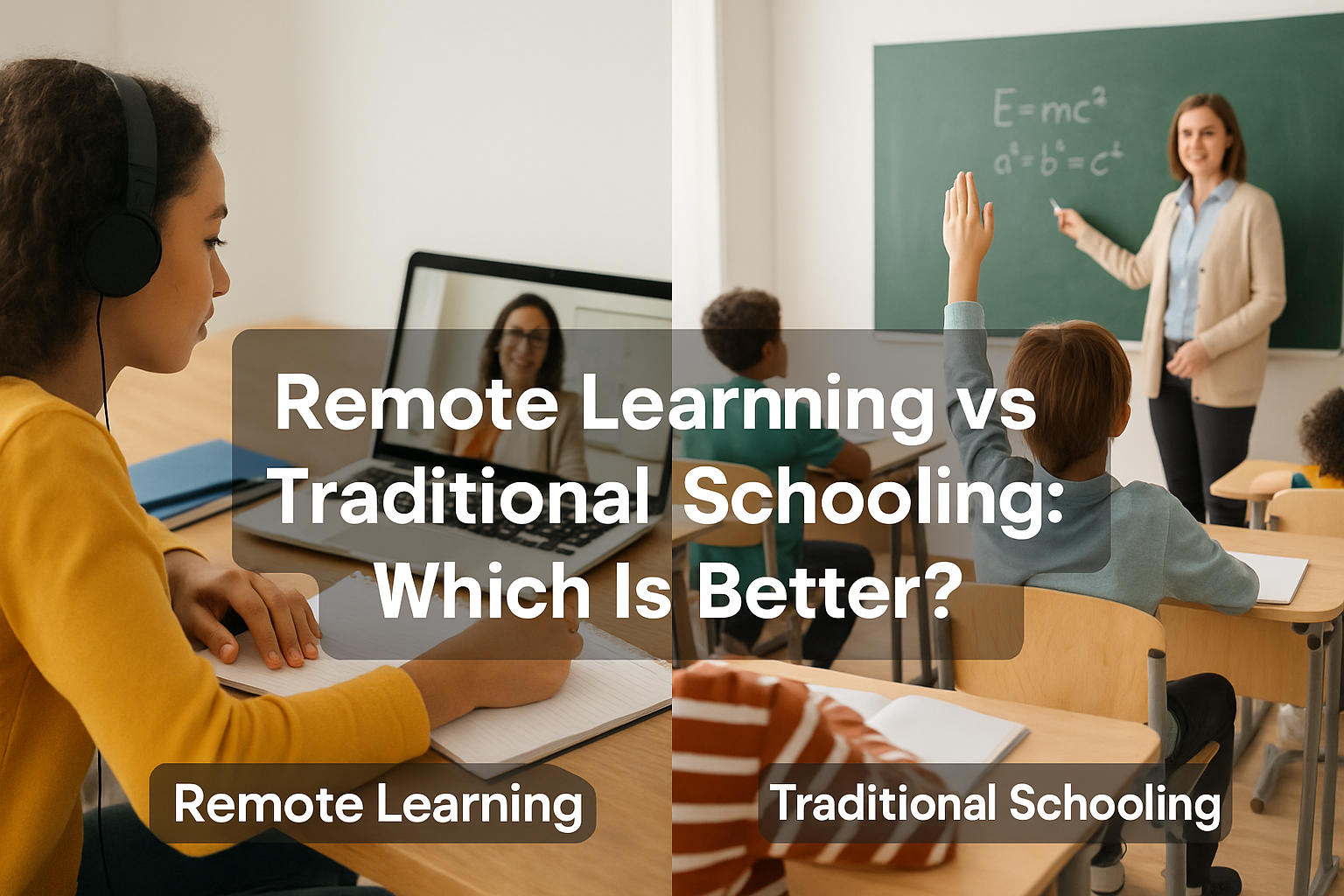
The debate between remote learning and traditional schooling has intensified in recent years. With advancements in technology and global events reshaping education, students, parents, and educators are asking: which method truly offers the best learning experience?
Remote learning offers flexibility, accessibility, and modern tools, while traditional schooling provides face-to-face interaction, structured environments, and social development. In this blog, we’ll explore the pros, cons, and practical considerations of each approach, helping you decide which may be better in 2025 and beyond.
1. What Is Remote Learning?
Remote learning, also known as online or distance learning, refers to education delivered virtually via computers, tablets, or smartphones.
Key Features
- Online lectures, videos, and tutorials
- Digital assignments and assessments
- Virtual collaboration tools (Zoom, Google Classroom, Microsoft Teams)
- Flexible schedules and self-paced learning
Remote learning allows students to access education from anywhere, breaking geographical and time barriers.
2. What Is Traditional Schooling?
Traditional schooling is the classic classroom model, involving in-person attendance and teacher-led instruction.
Key Features
- Face-to-face lectures and discussions
- Physical classrooms and campus environment
- Structured daily schedule
- Direct supervision and immediate support from teachers
Traditional schooling provides a structured, socially interactive environment that has been the foundation of education for centuries.
3. Benefits of Remote Learning
1. Flexibility
- Learn at your own pace and schedule
- Ideal for students with extracurricular commitments or part-time jobs
2. Accessibility
- Reach students in rural or remote areas
- Online courses from global institutions available worldwide
3. Personalized Learning
- Adaptive learning platforms adjust content based on progress
- Students can focus on areas they find challenging
4. Technological Skill Development
- Familiarity with digital tools and platforms prepares students for modern workplaces
5. Cost-Effectiveness
- Reduced commuting, accommodation, and material costs
- Many online courses are affordable or free
Remote learning empowers students to take control of their education, making it adaptable and modern.
4. Drawbacks of Remote Learning
While remote learning offers advantages, it comes with challenges:
- Limited social interaction: Less opportunity for peer collaboration
- Self-discipline required: Students must stay motivated and organized
- Screen fatigue: Extended online sessions can strain eyes and focus
- Technical issues: Internet access and device quality can affect learning
- Hands-on experiences limited: Labs, field trips, and practical lessons are harder to replicate
Understanding these limitations helps students and parents prepare for a successful remote learning experience.
5. Benefits of Traditional Schooling
Traditional schooling has its own strengths:
1. Social Development
- Interaction with peers fosters communication, empathy, and teamwork
- Group projects and class discussions enhance collaboration skills
2. Structured Environment
- Fixed schedules create routine and discipline
- Immediate teacher guidance improves understanding and accountability
3. Extracurricular Activities
- Sports, clubs, arts, and field trips offer holistic development
- Encourages creativity, leadership, and physical fitness
4. Hands-On Learning
- Labs, experiments, and practical exercises enrich understanding
- Direct access to teachers and resources for instant clarification
Traditional schooling provides a balanced combination of academics, social skills, and personal growth.
6. Drawbacks of Traditional Schooling
- Less flexibility: Fixed schedules may not suit every learner
- Commute time: Travel to school can be time-consuming and tiring
- Cost: Private or specialized schools can be expensive
- Limited personalization: Teacher-to-student ratio may prevent individualized attention
- Dependency on location: Quality education may vary based on region
These factors can affect accessibility, convenience, and efficiency for modern learners.
7. Academic Performance: Remote vs Traditional
Studies suggest both modes can achieve strong academic outcomes if applied effectively:
- Remote learning can be effective for self-motivated, tech-savvy students
- Traditional schooling benefits students needing structured guidance and social support
- Hybrid models (combining both) often yield the best results by offering flexibility with in-person interaction
The effectiveness largely depends on student personality, resources, and learning environment.
8. Social and Emotional Development
Social and emotional learning is critical for personal growth:
- Traditional schools foster friendships, teamwork, and interpersonal skills
- Remote learners may miss face-to-face social interactions, but virtual communities and online collaboration can partially compensate
- Emotional support from teachers and peers is more immediate in traditional settings
Balancing academic achievement with social-emotional development is essential when choosing the right mode.
9. Future Trends in Education (2025 and Beyond)
The future of learning is moving toward hybrid and technology-integrated approaches:
- Blended learning: Combines online lectures with in-person labs and discussions
- AI-powered platforms: Personalized learning paths and real-time feedback
- Virtual reality classrooms: Immersive experiences for labs, field trips, and historical explorations
- Global access: Students can take courses from international universities without leaving home
- Gamification: Making learning interactive and engaging
Education is becoming flexible, personalized, and tech-savvy, benefiting both remote and traditional learners.
10. Choosing the Right Option for You
When deciding between remote learning and traditional schooling, consider:
- Learning style: Self-disciplined and independent vs. structured and guided
- Social needs: Desire for peer interaction and extracurricular activities
- Resources: Internet access, devices, and suitable study space
- Career goals: Certain fields may require hands-on experience
- Flexibility needs: Work, family, or lifestyle commitments
Often, hybrid approaches offer the best of both worlds, combining flexibility, technology, and in-person interaction.
Conclusion
There is no universal answer to whether remote learning or traditional schooling is better. Both have strengths and weaknesses depending on the learner’s personality, goals, and environment.
- Remote learning offers flexibility, accessibility, and modern tech skills
- Traditional schooling provides structured learning, social development, and hands-on experiences
The future lies in blended education, combining the advantages of both approaches. By 2025, students who can adapt to hybrid models and leverage digital tools will likely excel academically while developing essential social and practical skills.