
Introduction
Emerging technologies are transforming the world at an unprecedented pace, reshaping how we live, work, and interact. Innovations such as artificial intelligence, automation, augmented and virtual reality, and the Internet of Things are no longer confined to science fiction—they are embedded into our daily routines, workplaces, and global infrastructure. These technologies influence everything from communication and productivity to healthcare, transportation, and entertainment.
The ongoing digital revolution is not just about convenience; it is redefining human capabilities and societal structures. This blog explores how emerging technologies are changing the way we live and work, highlighting both the opportunities and challenges that come with these transformative advancements.
Artificial Intelligence: Smarter Decisions and Automation
Artificial intelligence (AI) is at the forefront of technological transformation. AI systems analyze massive datasets, identify patterns, and make predictions that help businesses and individuals make smarter decisions. In workplaces, AI automates routine tasks, improves operational efficiency, and supports data-driven strategies.
For everyday life, AI powers voice assistants, personalized recommendations, and smart home devices, making daily tasks faster and more convenient. While AI offers remarkable efficiency and convenience, it also raises questions about employment, ethics, and the need for continuous learning to stay relevant in a changing workforce.
Automation: Streamlining Workflows and Industries
Automation is changing traditional work structures across industries. Manufacturing, logistics, customer service, and even creative professions increasingly rely on automated systems to handle repetitive or data-heavy tasks. Robotics and software automation enhance productivity, reduce human error, and free workers to focus on more strategic or creative responsibilities.
For individuals, automation improves efficiency in personal projects and professional workflows, from scheduling tasks to managing finances. While some fear job displacement, automation also creates opportunities for new roles in oversight, programming, and system management.
Remote Work and Collaboration Technologies
The rise of collaboration tools, cloud computing, and video conferencing has revolutionized the way we work. Remote work, once a niche option, has become mainstream, allowing teams to operate globally without being tied to physical offices. Emerging technologies provide seamless communication, file sharing, and project management, creating virtual workplaces that rival traditional office setups.
For employees, remote work offers flexibility, better work-life balance, and reduced commuting stress. For companies, it opens access to global talent pools and reduces operational costs. These tools continue to evolve, incorporating AI-driven scheduling, productivity analytics, and immersive virtual meeting spaces.
Augmented Reality and Virtual Reality: Immersive Experiences
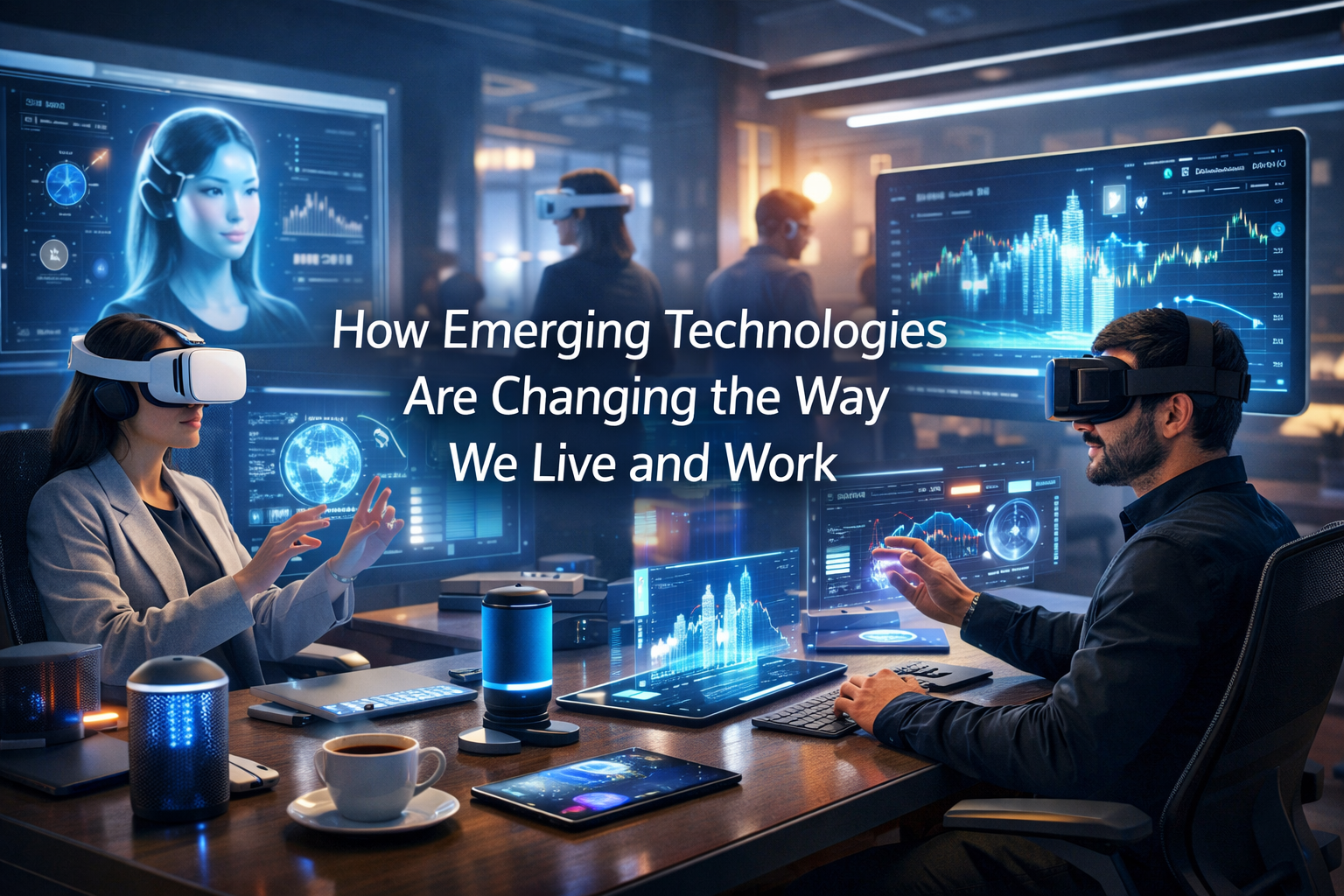
AR and VR technologies are changing both professional and personal experiences. In workplaces, VR enables realistic simulations for training, design, and remote collaboration. AR enhances productivity by overlaying digital information onto the physical world, supporting fields like healthcare, engineering, and logistics.
In everyday life, AR and VR offer immersive gaming, virtual travel, and interactive learning. These technologies blur the lines between digital and physical realities, providing new ways to work, learn, and entertain ourselves in engaging, experiential ways.
The Internet of Things: Smart Homes and Cities
The Internet of Things (IoT) connects everyday objects to the internet, allowing them to communicate, monitor, and optimize their functions. Smart homes equipped with IoT devices manage energy consumption, security, and convenience automatically. In urban settings, IoT powers smart cities that monitor traffic, pollution, and public safety in real time.
IoT integration in daily life reduces manual effort, enhances comfort, and provides data-driven insights that improve decision-making. These connected systems also open opportunities for innovation in healthcare, transportation, and resource management.
Blockchain: Security, Transparency, and Trust
Blockchain technology is transforming industries that rely on secure and transparent transactions. From finance and supply chains to healthcare and digital identity management, blockchain ensures data integrity, traceability, and security without relying on centralized authorities.
For businesses and individuals, blockchain offers a new level of trust in digital interactions, supporting secure payments, contracts, and asset management. Its impact extends beyond technology, influencing regulatory frameworks, governance, and global commerce.
Healthcare Innovations: Personalized and Predictive Care
Emerging technologies are revolutionizing healthcare through AI diagnostics, wearable devices, telemedicine, and genomics. Patients can monitor their health in real time, receive personalized treatment recommendations, and consult doctors remotely.
Predictive analytics helps healthcare providers identify risks early, improving outcomes and reducing costs. Technology-driven healthcare not only enhances efficiency but also empowers individuals to take proactive control of their well-being.
Education and Lifelong Learning
Education is being transformed by online learning platforms, AI tutors, and immersive technologies. Students and professionals can access global expertise, interactive lessons, and adaptive learning paths tailored to their skills and pace.
Emerging technologies promote lifelong learning, enabling individuals to upskill or reskill efficiently. As careers evolve, continuous education becomes essential, and technology ensures that learning is accessible, engaging, and personalized.
Challenges and Considerations
While emerging technologies offer immense benefits, they also introduce challenges. Data privacy, cybersecurity, ethical considerations, and the digital divide require careful attention. Individuals and organizations must stay informed, adapt responsibly, and invest in skill development to thrive in this technological era.
Balancing innovation with responsibility ensures that technology serves humanity’s best interests without creating undue risks or inequities.
Conclusion
Emerging technologies are reshaping the way we live and work, creating opportunities for efficiency, creativity, and connectivity previously unimaginable. From AI-driven decision-making and automation to AR, VR, IoT, and blockchain, these innovations influence every facet of our lives, transforming workplaces, homes, education, and healthcare.
As technology continues to evolve, individuals and organizations must embrace continuous learning, adaptability, and ethical responsibility. By doing so, we can fully harness the potential of emerging technologies to create a more connected, productive, and fulfilling future for everyone.