
Introduction
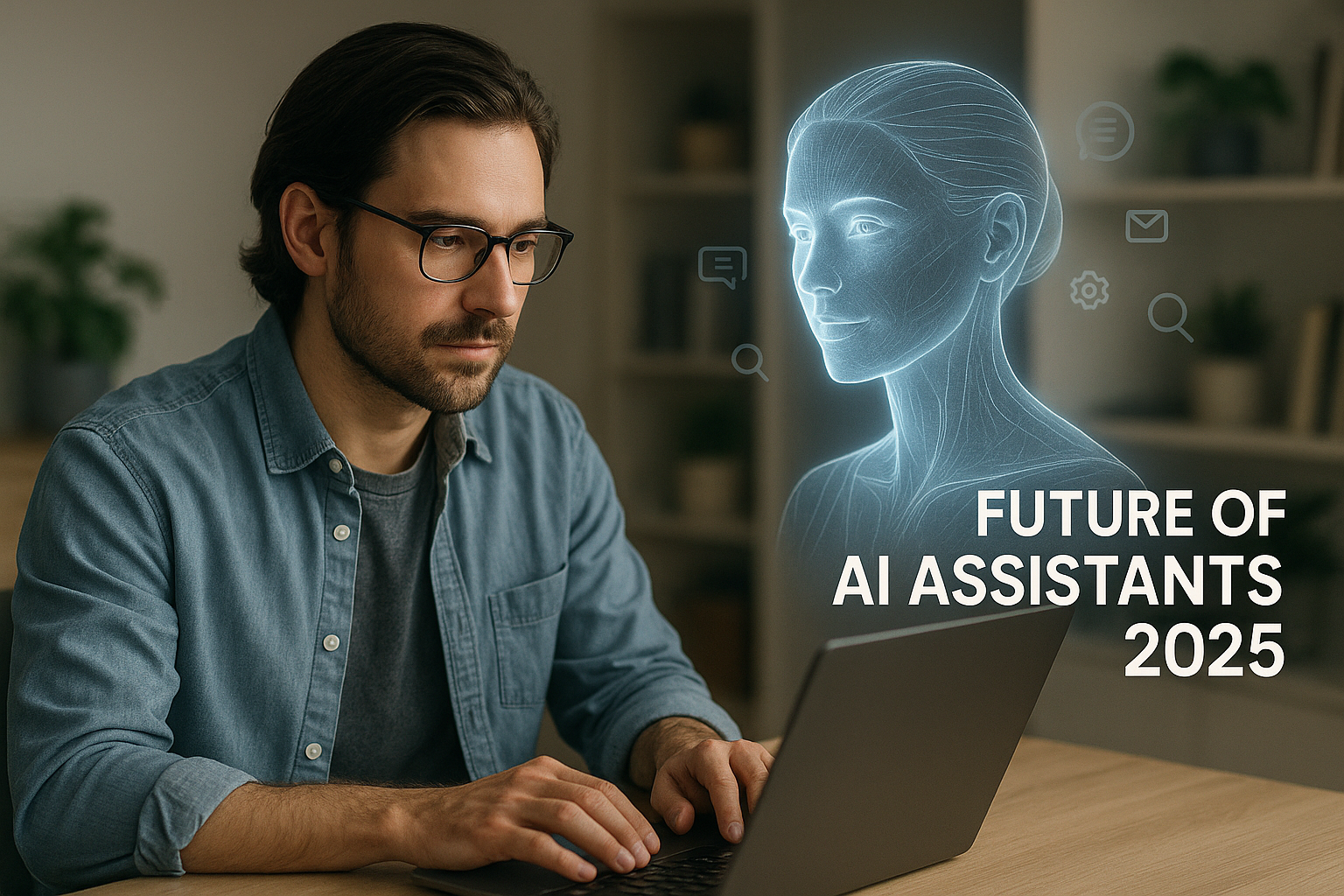
Artificial Intelligence has evolved rapidly over the past decade, transforming the way humans interact with technology. From sending reminders and setting alarms to managing smart homes and handling business tasks, AI assistants have become everyday companions for millions of people. But in 2025, the world is witnessing a massive revolution in how AI assistants function. They’re no longer just voice-activated helpers—they’re smarter, faster, more proactive, and surprisingly more human-like.
As AI models grow in intelligence, adaptability, and emotional understanding, they are reshaping industries, enhancing productivity, and offering personalized experiences like never before. Whether it’s answering complex questions, creating content, helping businesses automate workflows, or even predicting user needs, AI assistants are becoming essential partners in modern life. This blog explores what makes AI assistants in 2025 so advanced, how they’re changing daily life, and what the future holds.
1. More Human-Like Conversations
AI assistants today can understand natural language more accurately than ever. Thanks to massive improvements in language models, AI can interpret context, tone, and emotions and respond in a way that feels natural, warm, and relatable.
Key improvements include:
- Better emotional understanding
- Personality-rich responses
- Fewer errors and misunderstandings
- Ability to remember context within conversations
This allows AI assistants to act not only as productivity tools but also as digital companions capable of offering motivation, emotional support, and guidance.
2. Faster Processing With Real-Time Intelligence
AI assistants in 2025 operate at lightning speed. With powerful on-device processing and faster cloud models, users get instant responses—even for complex tasks like generating reports, summarizing videos, or analyzing data.
What makes them faster?
- Upgraded neural engines in smartphones and laptops
- 5G and the emerging 6G network
- Optimized AI chips in smart devices
- Better energy efficiency
This real-time responsiveness makes AI feel even more seamless and integrated into daily life.
3. Hyper-Personalized User Experiences
In 2025, AI assistants adapt to each user like a personal concierge. They study behavior, preferences, routines, and habits to deliver ultra-personalized experiences.
Examples of personalization include:
- Custom health & fitness suggestions
- Tailored travel plans
- Personalized learning recommendations
- Productivity routines based on your schedule
- Smart shopping and budget suggestions
The AI doesn’t just react—it predicts, recommends, and guides.
4. AI Assistants in Smart Homes: Beyond Basic Automation
Smart homes have become more intelligent, and AI assistants are at the center of this transformation. Voice commands have evolved into intuitive interactions.
Capabilities include:
- Automatically optimizing room temperature
- Managing appliances based on user routines
- Enhancing home security through smart sensors
- Coordinating between multiple devices
- Energy-saving recommendations
Your home now “learns” from your lifestyle, making living spaces more comfortable, efficient, and personalized.
5. Advanced Multimodal Abilities (Text, Voice, Vision & More)
AI assistants in 2025 are no longer limited to voice or text. They can now see, analyze, and even create visual content.
This includes:
- Understanding images, documents, and videos
- Generating visuals, designs, and presentations
- Editing media with simple prompts
- Analyzing visual data (health scans, receipts, charts)
Imagine pointing your camera at a dish and the AI instantly giving you the recipe—or snapping a picture of a document and having it summarized in seconds. That’s the power of multimodality.
6. AI Assistants as Professional Partners
AI assistants are increasingly used in workplaces to automate tasks and improve efficiency.
They help in:
Common professional uses:
- Writing emails, blogs, and reports
- Scheduling and calendar management
- Data analysis and insights
- Generating presentations
- Customer service automation
- Managing online businesses
- Coding and debugging
In 2025, companies see AI assistants as essential teammates who help reduce workload and save countless hours.
7. Emotional Intelligence and Empathy
One of the most groundbreaking developments in 2025 is the rise of emotionally intelligent AI assistants. These systems understand user moods and adjust their tone, suggestions, and responses accordingly.
AI can now:
- Sense frustration in voice or text
- Provide emotional support
- Assist with mental wellness routines
- Offer calming exercises or positive affirmations
- Respond in a comforting, encouraging tone
This creates a more human-like bond between users and AI, making conversations feel smoother and more relatable.
8. AI Assistants in Education
Education is one of the biggest benefactors of AI advancements. AI assistants serve as personal tutors, helping students understand concepts, practice problems, and stay organized.
What AI offers to students:
- Step-by-step explanations
- Personalized learning plans
- Real-time doubt solving
- Content summaries
- Exam preparation help
- Language translation and grammar support
This makes learning more accessible for students of all ages.
9. AI Assistants in Healthcare
Healthcare has entered a new era thanks to AI-driven tools. AI assistants now act as personal health advisors.
AI helps users by:
- Tracking daily health data
- Suggesting workouts and diets
- Identifying early symptoms through patterns
- Reminding users to take medications
- Offering mental health check-ins
For doctors, AI provides support with diagnostics, patient records, and data analysis, making the healthcare system more efficient.
10. The Future: AI Assistants Will Become Digital Extensions of Ourselves
Looking ahead, AI assistants will integrate even deeper into human lifestyles. They will become digital extensions—helping us think, work, create, plan, and live better.
Future possibilities include:
- Fully autonomous task completion
- Personalized life management
- AI-driven virtual reality companions
- Assistants with human-like voice and facial expressions
- Adaptive personality settings
- Memory functions across devices and platforms
AI won’t replace humans. Instead, it will enhance capabilities, making everyday tasks easier and life more efficient.
Conclusion
The evolution of AI assistants in 2025 represents a major milestone in technological advancement. From smarter conversations to emotional intelligence, from professional assistance to healthcare support, AI has become a valuable partner in modern life.
As AI continues to get faster, more intuitive, and more human-like, it will redefine how we work, communicate, learn, and manage our daily routines. The future of AI assistants is not just about automation—it’s about empowerment. These systems will continue to grow into intelligent companions that enrich our lives and help us reach our fullest potential.
The world is moving toward an era where humans and AI blend seamlessly, creating a smarter, more connected future.