
Introduction
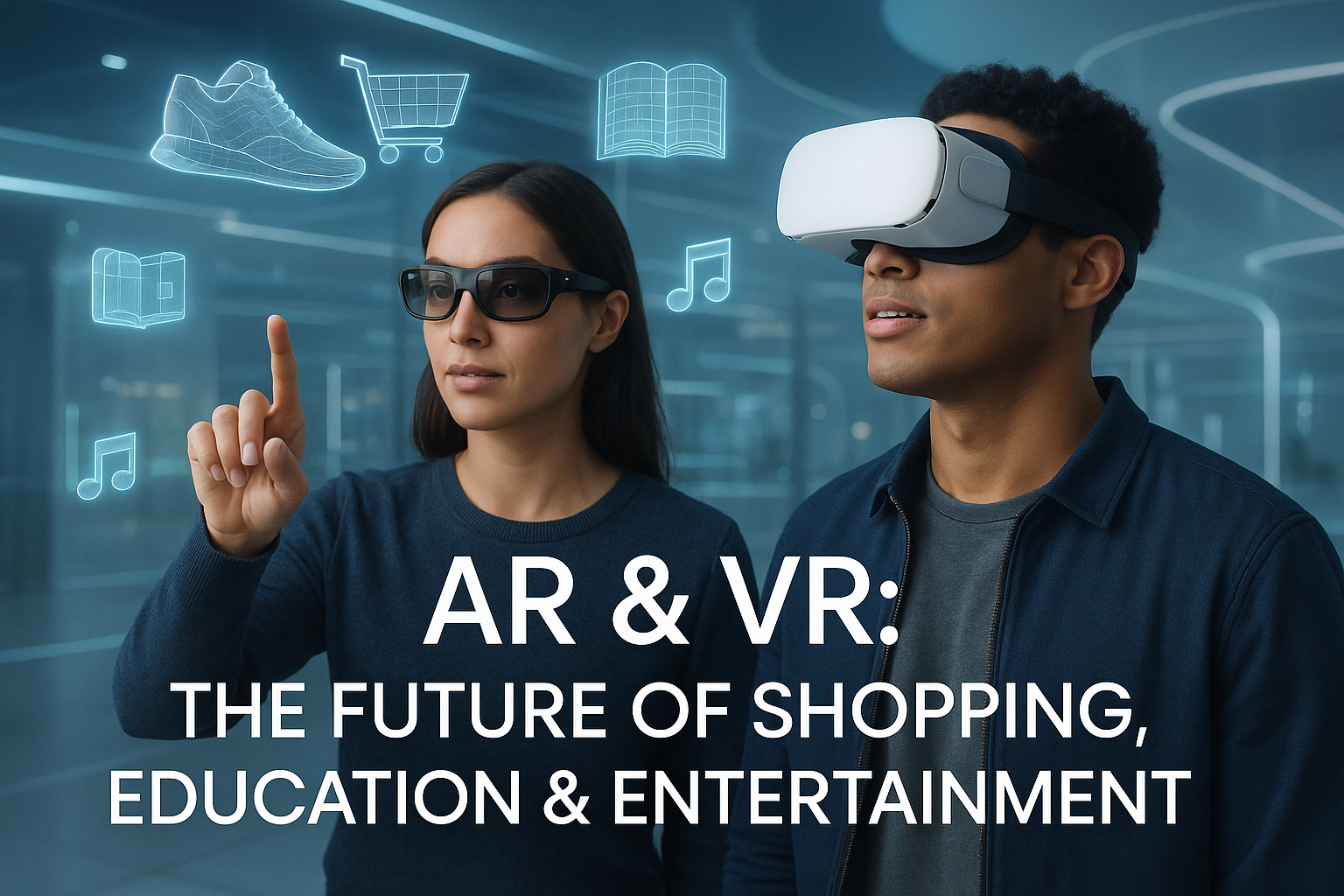
The world is evolving faster than ever, and at the heart of this evolution are immersive technologies—Augmented Reality (AR) and Virtual Reality (VR). By 2025, these technologies are no longer futuristic ideas; they are transforming the way we shop, learn, and experience entertainment. AR overlays digital elements onto the real world, while VR transports users into fully simulated environments. When combined, they unlock new experiences that reshape everyday life.
From virtual stores and interactive classrooms to immersive movies and gaming worlds, AR and VR are creating smarter, richer, and more personalized experiences. In this blog, we’ll explore how these technologies are driving massive changes in shopping, education, and entertainment, and what the future looks like for these industries.
1. AR & VR in Shopping: The New Way to Buy
Shopping is one of the sectors experiencing the fastest transformation through AR and VR. Gone are the days when customers relied only on product photos or descriptions. Now, immersive technology is making online shopping more interactive, accurate, and fun.
Try Before You Buy
AR lets customers visualize products in real-world settings before purchasing.
Examples include:
- Trying on clothes using a virtual fitting room
- Visualizing furniture inside your home
- Testing makeup shades on your face
- Viewing a 3D version of a product before buying
This reduces buyer hesitation and increases confidence in online purchases.
Virtual Stores and Showrooms
Brands are creating VR showrooms where customers can browse the store from home wearing a VR headset. These virtual stores:
- Look like real physical stores
- Allow customers to walk around, pick up items, and see details
- Provide immersive brand experiences
- Offer 24/7 accessibility
This blends the convenience of e-commerce with the feeling of in-store shopping.
Personalized Shopping Experience
AI-powered AR tools can recommend products based on preferences, measurements, or past purchases. This personalization enhances satisfaction and increases conversion rates for brands.
2. AR & VR in Education: A New Learning Era
Education has undergone a massive digital shift, and AR/VR is making learning more interactive, exciting, and effective than ever.
Immersive Classrooms
VR allows students to enter virtual worlds where they can:
- Visit historical places
- Explore outer space
- Dive into the ocean
- Observe scientific phenomena
This makes learning experiential rather than theoretical.
Hands-On Training Without Risk
AR & VR are transforming professional training in fields like:
- Medicine
- Engineering
- Aviation
- Military
- Manufacturing
Students can practice complex tasks in virtual environments without real-world consequences. For example, medical students can simulate surgeries, pilots can train in VR cockpits, and engineers can test machines without physical prototypes.
Remote Learning Becomes More Engaging
With VR classrooms and AR study tools, remote education becomes more immersive. Students can attend virtual lectures, collaborate with classmates, and interact with 3D educational content from home.
This new model improves:
- Attention span
- Understanding
- Memory retention
- Team collaboration
3. AR & VR in Entertainment: A Complete Revolution
Entertainment is one of the biggest beneficiaries of immersive technology. Whether it’s gaming, movies, live events, or theme parks, AR and VR are creating unforgettable experiences.
Immersive Gaming Worlds
VR gaming provides:
- 360-degree experiences
- Real-time interaction
- Motion tracking
- Full-body controllers
Players feel like they are inside the game—exploring virtual landscapes or battling opponents in real time. AR games, like Pokémon GO, blend virtual characters with real surroundings for hybrid experiences.
Virtual Movies and Cinemas
Imagine sitting inside a movie scene instead of watching it on a screen. VR cinema is making this possible by offering:
- First-person storytelling
- 360-degree cinematic views
- Interactive story choices
This creates a personalized, immersive movie experience.
Virtual Concerts and Events
Artists and companies are already hosting concerts inside VR worlds. Fans can:
- Attend events from anywhere
- Interact with performers
- Experience 3D visual effects
- Connect with global audiences
This makes entertainment accessible to people worldwide.
Theme Parks and Simulated Adventures
VR-powered rides and AR-enhanced attractions are becoming major parts of global theme parks. These experiences combine physical rides with virtual visuals, creating hyper-realistic adventures.
The Future of AR & VR: What to Expect
By 2030, AR and VR will be more advanced, more affordable, and more integrated into daily life.
We can expect:
- Lightweight AR glasses replacing smartphones
- Fully virtual shopping malls
- AI-powered digital teachers
- VR travel experiences that feel real
- Hologram-based entertainment
- 3D social media experiences
As these technologies evolve, our physical and digital worlds will merge seamlessly.
Conclusion
AR and VR are not just cool gadgets—they are powerful tools shaping the future of shopping, education, and entertainment. These technologies enhance convenience, creativity, and connection while offering richer, more personal experiences. Whether you’re buying clothes, learning biology, or watching a movie, AR and VR will play a bigger role every year.
As immersive technology continues to grow, the lines between the real world and the digital world will blur, creating a future full of exciting new possibilities.