
Introduction
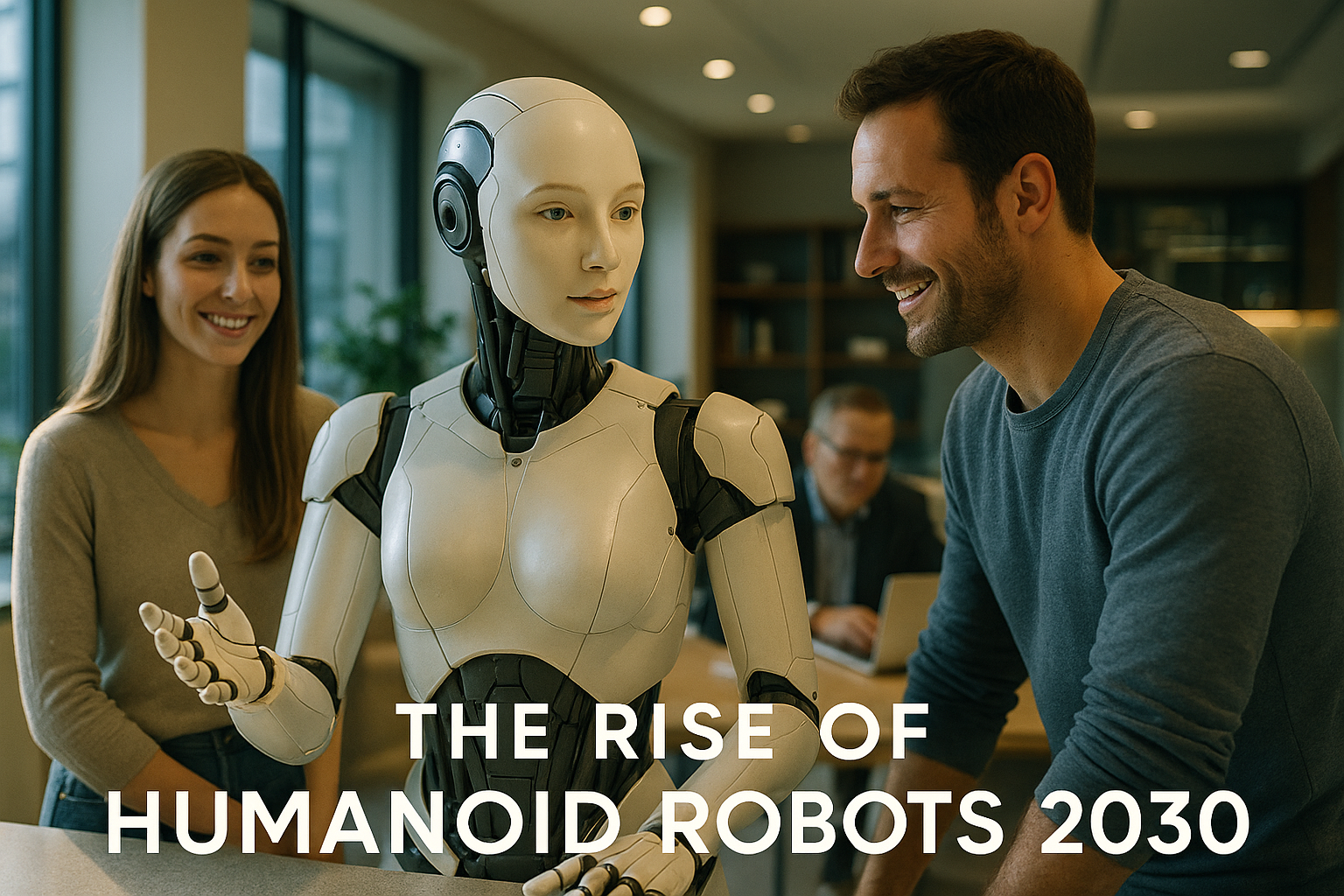
Humanoid robots, machines designed to resemble and interact like humans, have long been the subject of science fiction. Today, they are rapidly moving from fiction to reality. By 2030, humanoid robots are expected to become integral to daily life, reshaping industries, homes, healthcare, education, and entertainment.
With advances in Artificial Intelligence, robotics, sensors, and material science, humanoid robots are becoming more intelligent, versatile, and human-like in appearance and behavior. Unlike traditional robots, humanoids can communicate, understand context, navigate complex environments, and even display social behaviors.
In this blog, we’ll explore the rise of humanoid robots, their potential applications, challenges, and what society can expect by 2030.
1. Humanoid Robots in Everyday Life
By 2030, humanoid robots are expected to transition from specialized workplaces to personal and home environments.
Applications in homes:
- Household assistance: Cooking, cleaning, and maintenance tasks
- Companionship: Elderly care, mental health support, and social interaction
- Education: Tutoring children, assisting with remote learning
- Security: Monitoring homes and alerting for unusual activities
Humanoids will make everyday life more convenient and efficient, reducing mundane chores and providing personalized assistance.
2. Transforming Healthcare
Healthcare is one of the sectors where humanoid robots are set to make a profound impact.
Applications in healthcare include:
- Assisting doctors and nurses with patient care
- Performing repetitive medical tasks, such as taking vitals and administering medication
- Rehabilitation and physical therapy support
- Emotional support and companionship for elderly or disabled patients
- Remote diagnostics and telemedicine assistance
These robots could reduce workload for healthcare professionals while improving patient outcomes and accessibility.
3. Education and Learning Revolution
Humanoid robots in education will provide interactive, personalized learning experiences.
Possible applications by 2030:
- Acting as personal tutors capable of adapting lessons to each student’s pace
- Teaching foreign languages through real-time conversation
- Providing immersive STEM experiments and simulations
- Offering guidance and mentorship in schools and universities
By combining AI and humanoid interaction, learning will become more engaging, effective, and tailored to each student’s needs.
4. Humanoid Robots in the Workplace
Humanoid robots are set to change workplaces across industries.
Roles include:
- Customer service representatives in banks, hotels, and stores
- Receptionists and office assistants
- Factory supervisors capable of inspecting production lines
- Collaborative robots (cobots) working alongside humans in manufacturing
- Data analysis, reporting, and administrative support
By 2030, humanoid robots may become essential team members, complementing human skills and improving efficiency.
5. Entertainment and Media
The entertainment industry will also see significant transformations due to humanoid robots.
Examples include:
- Robot actors in films, theater, and advertisements
- Humanoids hosting live shows, events, and virtual performances
- Interactive gaming companions that respond like human players
- Theme park attractions with lifelike humanoid interactions
Entertainment will become more immersive and interactive, providing audiences with lifelike experiences that were previously impossible.
6. Social Interaction and Companionship
One of the most intriguing aspects of humanoid robots is their ability to engage socially.
Future capabilities:
- Detecting emotions and responding empathetically
- Offering companionship to the elderly, isolated, or people with disabilities
- Understanding and participating in social routines
- Assisting in public spaces as guides or information providers
By 2030, humanoids could become companions that offer support, empathy, and interaction similar to humans.
7. Advancements Driving Humanoid Robots
Several technological breakthroughs are fueling the rise of humanoid robots:
Key advancements include:
- Artificial Intelligence: Advanced natural language processing, decision-making, and learning
- Robotics & Mechanics: Smooth, human-like movements and dexterity
- Sensors & Cameras: High-precision perception of the environment
- Material Science: Flexible synthetic skin and lightweight, durable materials
- Energy Systems: Efficient batteries and wireless charging solutions
These innovations will make humanoid robots more capable, lifelike, and reliable.
8. Ethical and Social Considerations
As humanoid robots become more integrated into society, ethical concerns will rise.
Key considerations:
- Job displacement: Will humanoids replace human workers?
- Privacy: Data collection and monitoring in homes and workplaces
- Emotional dependency: Risks of forming attachments to robots
- AI decision-making: Accountability for robot actions
- Regulation: Guidelines for humanoid behavior, safety, and societal integration
Addressing these issues is crucial to ensure that humanoid robots enhance human life without creating new challenges.
9. Challenges Facing Humanoid Robots
Despite advancements, several challenges remain:
- High production costs limiting accessibility
- Energy consumption and battery life
- Complex human-robot interaction scenarios
- Technical limitations in AI, perception, and mobility
- Cultural acceptance and psychological barriers
Researchers and companies are actively working to overcome these challenges, making humanoids more practical and approachable for everyday life.
10. What to Expect by 2030
By 2030, we can anticipate:
- Widespread adoption of humanoids in homes, offices, hospitals, and schools
- Humanoids performing complex tasks with high efficiency
- Human-like social and emotional intelligence in robots
- Collaborative workplaces where humans and robots coexist
- Affordable options for personal assistants and healthcare support
Humanoid robots won’t replace humans—they will amplify human potential, improve quality of life, and make tasks easier, safer, and more efficient.
Conclusion
The rise of humanoid robots marks a new era in technology and society. By 2030, these intelligent, human-like machines will revolutionize the way we live, work, learn, and interact. From healthcare and education to entertainment and daily life, humanoids will become trusted partners, helping humans achieve more while improving convenience, efficiency, and safety.
As with any transformative technology, careful planning, ethical frameworks, and societal adaptation will be necessary. Yet the promise of humanoid robots is undeniable: a world where humans and robots coexist harmoniously, creating smarter, more connected, and more compassionate societies.
The future is near, and by 2030, humanoid robots may be not just tools, but companions, colleagues, and co-creators in our daily lives.