
Introduction
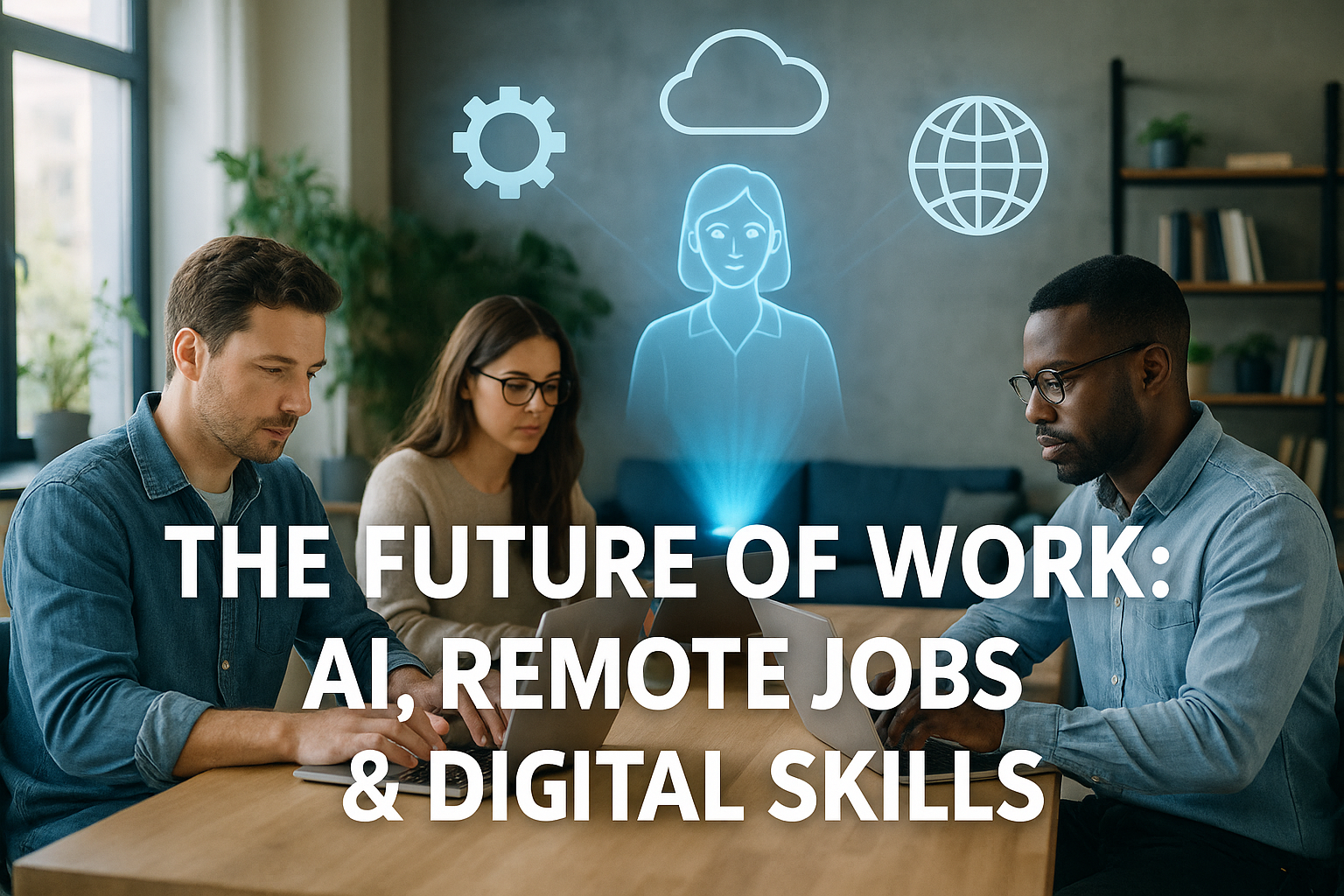
The workplace is undergoing a massive transformation. By 2025 and beyond, AI automation, remote jobs, and digital skills are reshaping industries, employee roles, and career opportunities. Traditional office settings are evolving into hybrid and fully remote environments, while artificial intelligence is taking over repetitive tasks, enabling humans to focus on creativity and strategic decision-making.
The future of work is not just about technology—it’s about adapting to new systems, learning new skills, and embracing flexibility. In this blog, we’ll explore how AI and automation are changing jobs, the rise of remote work, and the digital skills you’ll need to thrive in this new era.
1. AI Automation and Its Impact on Jobs
Artificial Intelligence (AI) is transforming how work gets done. From manufacturing floors to offices, AI and automation are streamlining repetitive tasks, improving efficiency, and reducing human error.
Key areas of AI impact:
- Data processing and analysis: AI algorithms can handle large datasets faster than humans
- Customer service: AI chatbots and virtual assistants manage queries 24/7
- Manufacturing and logistics: Robots automate assembly lines and warehouse operations
- Healthcare: AI supports diagnosis, patient monitoring, and administrative tasks
Jobs evolving due to AI:
- Roles like data entry clerks may decline
- New roles in AI management, algorithm training, and robotics maintenance will grow
- Human creativity, emotional intelligence, and critical thinking remain in high demand
AI is not necessarily replacing humans—it’s shifting the focus of work toward higher-value, strategic tasks.
2. The Rise of Remote Work
Remote work has surged, accelerated by technological advancements and global events. By 2025, remote jobs are expected to become a standard feature across industries.
Benefits of remote work:
- Flexibility in location and schedule
- Reduced commuting stress and costs
- Access to global talent pools for companies
- Work-life balance improvements
Remote-friendly industries:
- IT and software development
- Digital marketing and content creation
- Customer support and virtual assistance
- Education and online tutoring
- Finance and consulting
Remote work also encourages hybrid collaboration, combining physical offices with virtual teams, and fostering productivity while reducing operational costs.
3. Digital Skills: The Core of Future Careers
To thrive in the future of work, employees must acquire digital skills that complement AI and remote work environments.
Top digital skills in demand:
- Coding and software development: Python, JavaScript, AI/ML frameworks
- Data literacy: Data analysis, visualization, and interpretation
- Digital marketing: SEO, social media, content strategy, paid campaigns
- Cybersecurity: Protecting networks, devices, and personal data
- Cloud computing & collaboration tools: Microsoft 365, Google Workspace, Slack, Trello
Soft skills in the digital era:
- Critical thinking and problem-solving
- Communication in virtual environments
- Adaptability and continuous learning
- Emotional intelligence and teamwork
Building both technical and soft skills is crucial to remain competitive in the evolving workforce.
4. AI-Powered Tools Transforming Work
AI isn’t just automating—it’s enhancing productivity and creativity. Popular AI-powered tools include:
- ChatGPT and AI writing assistants: Streamline content creation
- AI project management: Predictive analytics for workflow optimization
- Automation platforms (UiPath, Zapier): Automate repetitive tasks
- AI design tools: Generate visuals, videos, and graphics quickly
Integrating these tools can boost efficiency and free up human time for strategic thinking and innovation.
5. Hybrid Work Models: Flexibility Meets Collaboration
The future of work combines remote work with occasional office presence for meetings and team-building. Hybrid models balance:
- Productivity: Focused remote work environments
- Collaboration: In-person brainstorming and networking
- Flexibility: Employees can work from home, co-working spaces, or offices
Tips for thriving in hybrid work:
- Develop digital communication skills
- Establish clear boundaries and schedules
- Use productivity and collaboration tools efficiently
- Participate in virtual team-building and skill-building sessions
Hybrid work models are likely to become the norm in knowledge-based industries.
6. Industries Most Impacted by AI and Automation
AI and automation will affect every sector, but some industries are evolving faster than others:
- Finance: AI-driven investment analytics and fraud detection
- Healthcare: Automated diagnostics, administrative workflows, and telemedicine
- Retail: AI in supply chain management, personalized recommendations
- Manufacturing: Robotics and predictive maintenance
- Education: Personalized learning experiences using AI tutors
Workers in these industries need to upskill continuously to stay relevant and take advantage of AI-powered tools.
7. Upskilling and Lifelong Learning
The future workforce requires continuous learning. With AI and technology evolving rapidly, employees must adapt:
Ways to upskill:
- Online courses (Coursera, Udemy, LinkedIn Learning)
- Certifications in AI, cloud computing, or cybersecurity
- Webinars and industry-specific workshops
- Hands-on projects and freelancing opportunities
Investing in digital skills and AI literacy ensures long-term career stability and adaptability.
8. The Role of Leadership in Future Workplaces
Leadership in AI-driven, remote-friendly workplaces is also evolving:
- Data-driven decision-making: Using AI insights to guide strategy
- Virtual team management: Leading remote or hybrid teams effectively
- Employee wellbeing: Balancing flexibility with productivity
- Innovation culture: Encouraging learning, experimentation, and adaptability
Future leaders will need to embrace technology while fostering human creativity and collaboration.
9. Challenges of the Future Workplace
While the future of work is exciting, it comes with challenges:
- Job displacement: Certain repetitive tasks may no longer require humans
- Digital fatigue: Long hours on screens may impact wellbeing
- Cybersecurity threats: Increased reliance on digital platforms increases vulnerability
- Equity and accessibility: Ensuring all employees have access to technology and skills
Addressing these challenges requires policies, training, and awareness to create inclusive and resilient workplaces.
10. Preparing for the Future of Work
To succeed in the future workplace:
- Adopt a growth mindset: Be open to change and continuous learning
- Develop digital literacy: Stay updated with AI, software, and digital tools
- Embrace remote collaboration: Learn communication and project management online
- Upskill strategically: Focus on skills that complement AI automation
- Maintain work-life balance: Prioritize mental health and productivity
By preparing now, employees can thrive in AI-driven, remote, and hybrid workplaces.
Conclusion
The future of work is here, shaped by AI automation, remote opportunities, and digital skill requirements. While technology will change how we work, human creativity, emotional intelligence, and adaptability remain irreplaceable.
By embracing AI tools, developing digital skills, and adapting to remote and hybrid work models, professionals can position themselves for success in the rapidly evolving global workforce.
The workplace of 2030 promises more flexibility, more innovation, and more opportunities—for those willing to learn, adapt, and grow alongside technology.