
Introduction
In 2025, our lives are more connected than ever. Smartphones, social media, streaming services, and constant notifications mean that we are rarely unplugged. While technology has brought countless benefits, overexposure can lead to stress, anxiety, sleep issues, and reduced productivity.
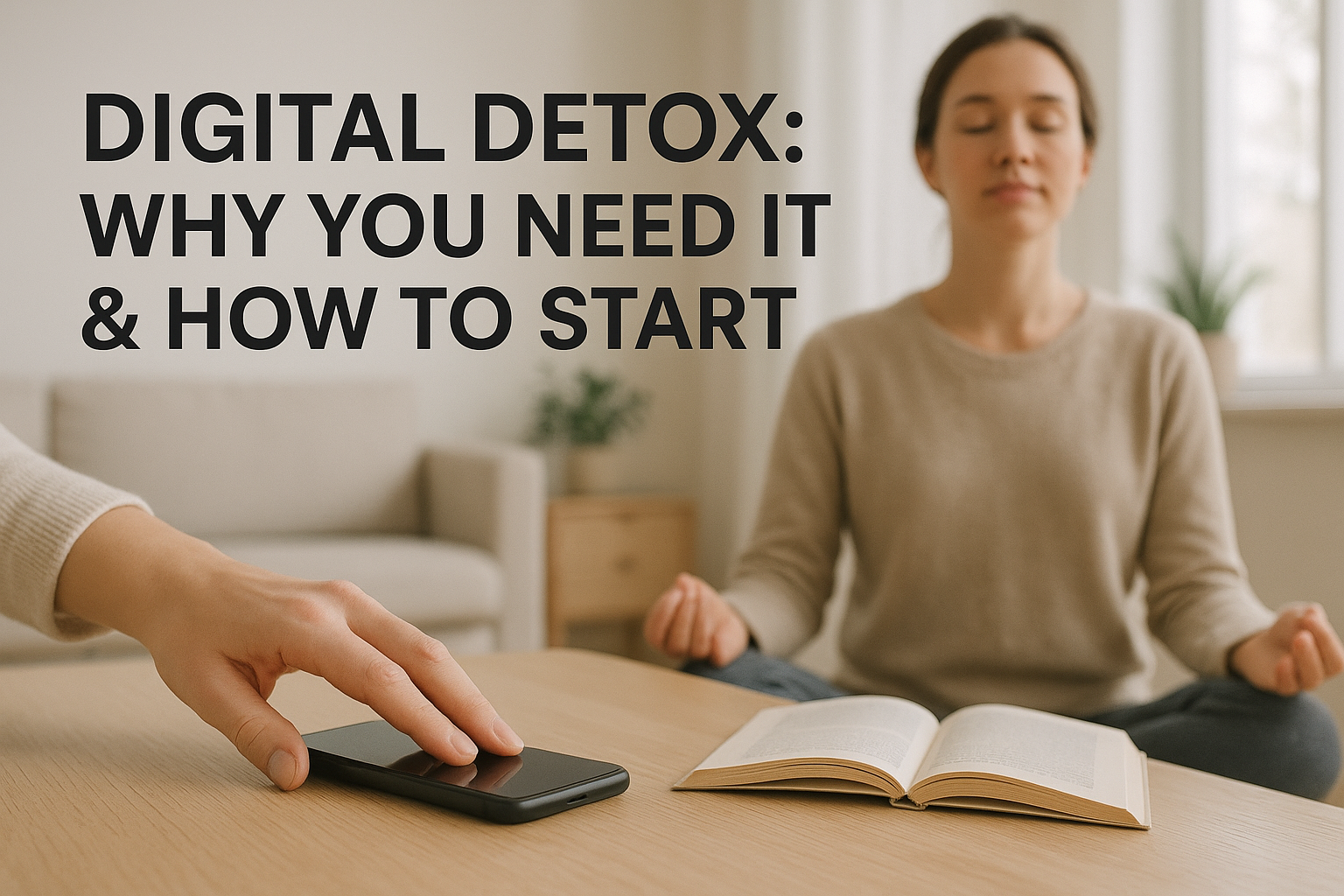
This is where a digital detox comes in—a conscious effort to reduce screen time and digital dependency. In this blog, we’ll explore why a digital detox is essential, its benefits, and practical steps to start one, helping you reclaim focus, balance, and well-being.
1. What Is a Digital Detox?
A digital detox involves temporarily disconnecting from electronic devices to reduce stress and improve mental, emotional, and physical health.
Key Features
- Limited or no use of smartphones, social media, or email
- Mindful use of technology for essential tasks only
- Increased focus on offline activities like reading, exercise, or hobbies
A digital detox is not about abandoning technology but using it consciously and intentionally.
2. Why You Need a Digital Detox
1. Reduce Stress and Anxiety
- Constant notifications and information overload trigger cortisol release
- Social media can create comparison stress and fear of missing out (FOMO)
2. Improve Sleep Quality
- Screen exposure, especially blue light, affects melatonin production
- Late-night scrolling disrupts sleep patterns
3. Boost Productivity
- Less distraction from social media and notifications
- Greater focus on important tasks and creative projects
4. Enhance Relationships
- Face-to-face interactions improve empathy and connection
- Reduced screen time encourages meaningful conversations
5. Mental Clarity and Mindfulness
- Disconnecting allows reflection, introspection, and stress reduction
- Encourages being present in the moment
Digital detox is a powerful tool for mental, emotional, and physical well-being.
3. Signs You Need a Digital Detox
- Constantly checking your phone or social media
- Feeling anxious when disconnected from devices
- Sleep disturbances linked to late-night screen use
- Reduced focus and productivity
- Neglecting hobbies, relationships, or self-care
Recognizing these signs helps take timely action before digital overload impacts health.
4. Benefits of a Digital Detox
Physical Benefits
- Reduced eye strain and headaches
- Less neck and back pain from prolonged device use
- Better sleep and circadian rhythm regulation
Mental and Emotional Benefits
- Lower stress and anxiety levels
- Improved mood and resilience
- Enhanced creativity and cognitive clarity
Social Benefits
- Strengthened relationships with family and friends
- Increased presence and engagement in conversations
- Deeper appreciation of offline experiences
A digital detox restores balance and supports holistic wellness.
5. How to Start a Digital Detox
Step 1: Set Clear Goals
- Decide on duration: a few hours, a day, or a weekend
- Specify which devices or apps to limit or avoid
- Identify the purpose: sleep improvement, stress reduction, focus, or relationship building
Step 2: Plan Offline Activities
- Reading, journaling, or creative hobbies
- Outdoor activities: walking, hiking, or sports
- Social interactions without screens
Step 3: Create a Tech-Free Zone
- Designate certain areas like bedroom, dining table, or living room as screen-free
- Avoid checking devices during meals or social gatherings
Step 4: Gradually Reduce Screen Time
- Turn off unnecessary notifications
- Use apps to track and limit usage
- Replace scrolling with intentional offline activities
Step 5: Reflect and Adjust
- Notice changes in mood, sleep, and focus
- Make digital detox a regular habit rather than a one-time event
6. Digital Detox Strategies in Daily Life
1. Morning and Evening Routines
- Avoid screens for the first 30–60 minutes after waking
- Replace late-night scrolling with reading or meditation
2. Social Media Control
- Limit social media to specific times
- Unfollow or mute accounts that trigger stress or negativity
3. Email and Messaging
- Check emails or messages at scheduled intervals
- Avoid constant notifications during work or study
4. Weekend Detox
- Dedicate a few hours or a full day to disconnect
- Spend time in nature, engage in hobbies, or connect with loved ones
5. Mindful Tech Use
- Use technology intentionally for learning, creativity, or work
- Avoid mindless browsing or binge-watching
7. Tools and Apps for a Balanced Digital Life
Ironically, technology itself can help manage screen time:
- Forest: Gamified focus and screen-free app
- Freedom: Blocks distracting apps or websites
- Screen Time (iOS) / Digital Wellbeing (Android): Track and limit usage
- Headspace / Calm: Mindfulness and meditation guidance
Using these tools promotes healthy tech habits without total disconnection.
8. Digital Detox at Work
Work-related digital overload can impact productivity and mental health.
Tips for Workplace Detox
- Schedule “focus hours” without email or Slack
- Take regular breaks away from screens
- Use analog tools like notebooks for planning or brainstorming
- Encourage team-wide screen-free meetings or breaks
Workplace digital detox improves focus, creativity, and employee well-being.
9. Social and Family Benefits
Digital detox isn’t just personal; it strengthens relationships:
- Family dinners without phones improve bonding
- Group activities like games or outdoor trips create shared experiences
- Encourages children and teens to develop offline hobbies
- Reduces conflicts caused by digital distractions
Digital detox fosters genuine connection and presence.
10. Challenges and How to Overcome Them
Common Challenges
- Fear of missing out (FOMO)
- Habitual phone checking
- Work or school requirements for connectivity
Solutions
- Start small: a few hours before gradually increasing duration
- Replace phone time with enjoyable offline activities
- Communicate intentions with colleagues and family
- Track progress and celebrate small successes
Overcoming challenges ensures a sustainable digital detox routine.
11. Incorporating Digital Detox in 2025 Lifestyle
In 2025, digital detox is part of a balanced, mindful lifestyle:
- Pair detox with mindfulness, meditation, and wellness routines
- Use wearables to monitor screen time and health metrics
- Integrate short offline breaks during work, learning, or study
- Encourage community challenges or family detox days
Digital detox aligns with the modern emphasis on wellness, mental health, and intentional living.
Conclusion
A digital detox is not a luxury—it’s a necessary practice in today’s hyper-connected world. By consciously reducing screen time, setting boundaries, and engaging in offline activities, you can boost mental clarity, improve relationships, enhance productivity, and restore overall well-being.
Starting small, using mindful strategies, and gradually incorporating digital detox into your routine in 2025 allows you to reclaim control over your time, focus, and happiness. Embrace digital detox not just as a break from technology, but as a path to balance, presence, and fulfillment.