
Introduction
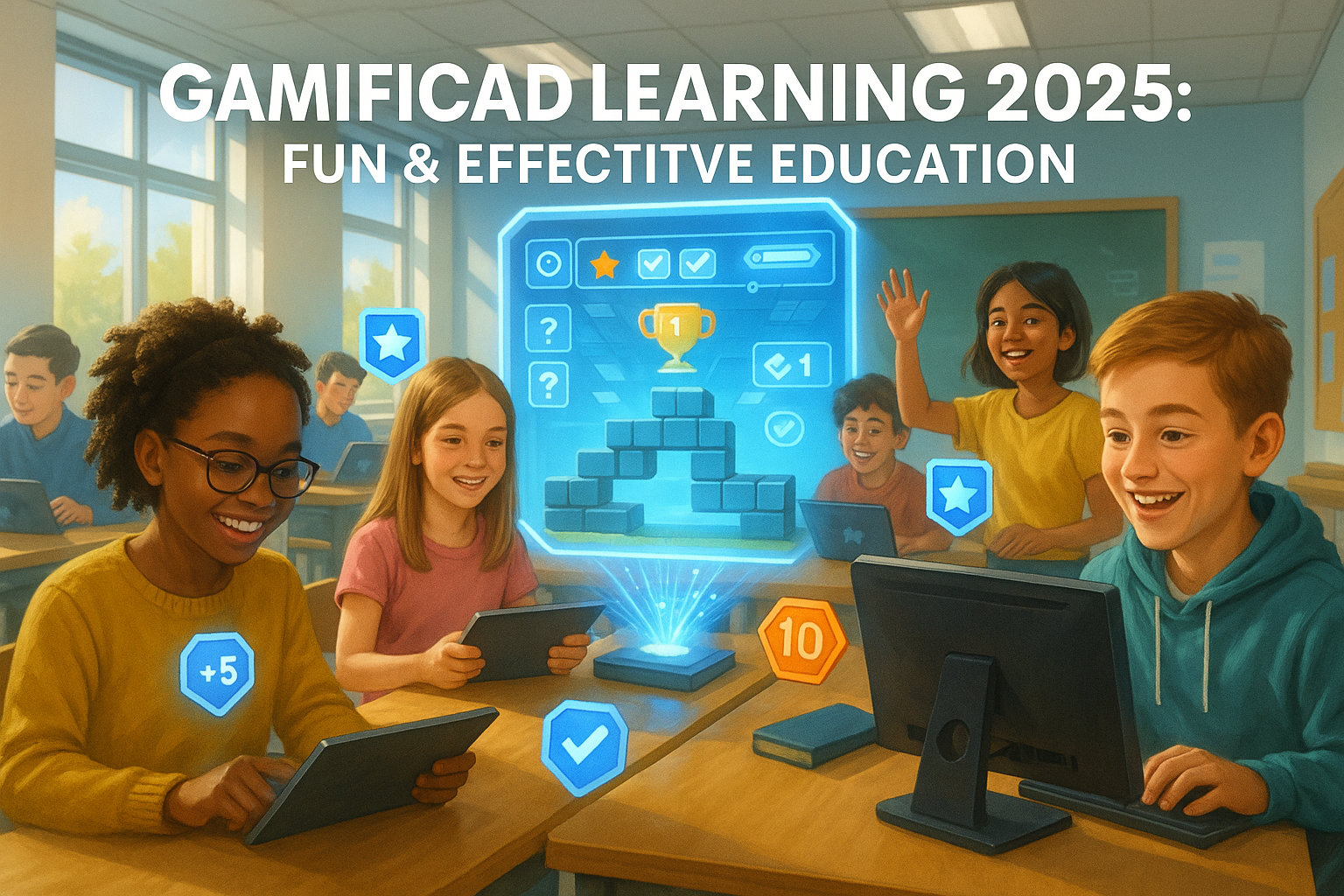
Learning doesn’t have to be boring. Traditional classroom methods often struggle to keep students engaged, especially in the age of digital distractions. Enter gamified learning—the integration of game mechanics into education. By turning lessons into interactive, rewarding experiences, gamification motivates students, fosters participation, and makes knowledge retention more effective.
Gamified learning is transforming classrooms, online courses, and corporate training programs around the world. In this blog, we’ll explore how gamification works, its benefits, examples, and why it’s shaping the future of education in 2025 and beyond.
1. What Is Gamified Learning?
Gamified learning involves applying game elements—like points, levels, challenges, and rewards—to educational content. Unlike educational games, gamified learning focuses on:
- Enhancing engagement
- Encouraging participation
- Motivating learners through competition, achievement, and fun
Core Components of Gamification in Education
- Points and scoring: Rewarding correct answers or participation
- Badges and achievements: Visual representation of milestones
- Leaderboards: Encouraging friendly competition
- Levels and progression: Showing growth and advancement
- Challenges and quests: Making learning goal-oriented and interactive
Gamified learning can be applied to classrooms, e-learning platforms, and mobile apps, making education more immersive and enjoyable.
2. Why Gamified Learning Works
Gamification taps into human psychology by leveraging motivation and reward systems.
Key Reasons for Effectiveness
- Increased engagement: Interactive lessons hold attention longer than traditional lectures
- Immediate feedback: Learners know what they got right or wrong, improving understanding
- Encourages persistence: Levels and challenges motivate students to overcome obstacles
- Supports social learning: Leaderboards, collaboration, and multiplayer learning encourage teamwork
- Enhances memory retention: Fun and interactive activities reinforce knowledge
By making learning enjoyable, students are more likely to actively participate and retain information.
3. Gamification in K–12 Education
Gamified learning is particularly effective in primary and secondary education. It encourages curiosity, problem-solving, and creativity.
Examples:
- Duolingo: Uses levels, streaks, and achievements to teach languages
- Kahoot!: Real-time quizzes and competitions for classroom engagement
- Prodigy Math Game: Combines role-playing and math challenges for elementary students
- Classcraft: Transforms classroom behavior and learning into a collaborative adventure game
These tools turn lessons into interactive experiences, making subjects like math, science, and languages more appealing.
4. Gamification in Higher Education
Universities and colleges are adopting gamification to improve student engagement in complex subjects.
Applications:
- Simulations and virtual labs: Students learn by experimenting in controlled virtual environments
- Progressive course structures: Gamified modules with points and badges for completing tasks
- Peer competition: Leaderboards in problem-solving exercises foster friendly competition
- Interactive assessments: Quizzes with rewards for accuracy and speed
Gamified higher education programs increase participation, motivation, and conceptual understanding, especially in STEM fields.
5. Corporate Training & Professional Development
Gamified learning isn’t limited to schools—it’s revolutionizing professional training.
Benefits for Businesses:
- Employee engagement: Gamification increases course completion rates
- Skill retention: Interactive exercises reinforce learning for real-world application
- Performance tracking: Leaderboards and badges provide measurable progress
- Team collaboration: Multiplayer challenges encourage problem-solving and teamwork
Examples:
- SAP’s Enterprise Learning Games: Enhance software training for employees
- Microsoft Learn gamified modules: Reward users with points and badges for learning new tools
- Kahoot! corporate quizzes: Encourage knowledge sharing in team meetings
Gamification in professional settings makes learning efficient, measurable, and fun.
6. Gamified Learning Technologies
Several technologies enable gamified learning:
1. Learning Management Systems (LMS)
- Platforms like Moodle, Canvas, and TalentLMS integrate badges, points, and leaderboards.
2. Mobile Learning Apps
- Apps like Duolingo, Khan Academy, and Quizlet gamify education for anytime learning.
3. Virtual Reality (VR) & Augmented Reality (AR)
- Immersive experiences where learners interact with 3D environments and scenarios.
4. AI-Powered Gamification
- Adaptive challenges based on learner performance
- Personalized quizzes and dynamic rewards
These technologies make gamified learning scalable, adaptive, and accessible for students worldwide.
7. Benefits of Gamified Learning
Gamified learning provides measurable benefits for students, educators, and organizations.
For Students
- Increased motivation and engagement
- Improved retention and understanding
- Encouragement of self-paced learning
- Development of problem-solving, collaboration, and critical-thinking skills
For Educators
- Simplified tracking of student progress
- Easier integration of interactive lessons
- Ability to identify struggling students early
For Organizations
- More effective employee training programs
- Higher retention of corporate knowledge
- Positive impact on workplace culture and productivity
8. Examples of Gamified Learning Success
Education:
- Classcraft: Classroom behavior and learning are transformed into a multiplayer RPG experience
- Kahoot!: Increased student engagement in quizzes and interactive lessons
Corporate:
- Cisco’s Gamified Training Programs: Increased certification completion rates
- Microsoft Learn: Gamified points and badges improved user engagement and skill adoption
These examples show that gamified learning boosts results and enjoyment simultaneously.
9. Challenges and Considerations
While gamified learning is highly effective, it comes with challenges:
Potential Challenges
- Overemphasis on competition: Could discourage some students
- Excessive rewards: Students might focus on points rather than learning
- Accessibility: Not all students have access to technology
- Design complexity: Effective gamification requires thoughtful integration into curriculum
Educators and organizations must balance fun with meaningful learning outcomes to ensure long-term benefits.
10. The Future of Gamified Learning in 2025
Gamified learning will continue to evolve:
- AI personalization: Learning paths tailored to individual performance and preferences
- Immersive VR classrooms: Fully interactive 3D learning environments
- Blockchain-based achievements: Secure, verifiable digital credentials for gamified learning milestones
- Cross-platform gamification: Seamless integration of learning games across mobile, desktop, and VR
By 2025, gamified learning will be mainstream in education and corporate training, combining fun, engagement, and measurable outcomes.
Conclusion
Gamified learning is reshaping how we approach education by making it interactive, enjoyable, and effective. From K–12 classrooms to corporate training, incorporating points, challenges, rewards, and immersive technology keeps learners motivated and engaged.
As we move toward 2025, gamified learning will continue to grow, driven by AI, VR, and adaptive technologies, creating learning experiences that are not only fun but also deeply impactful. Whether you’re a student, teacher, or professional, gamification is a game-changer that turns learning into an adventure worth experiencing.