
Introduction
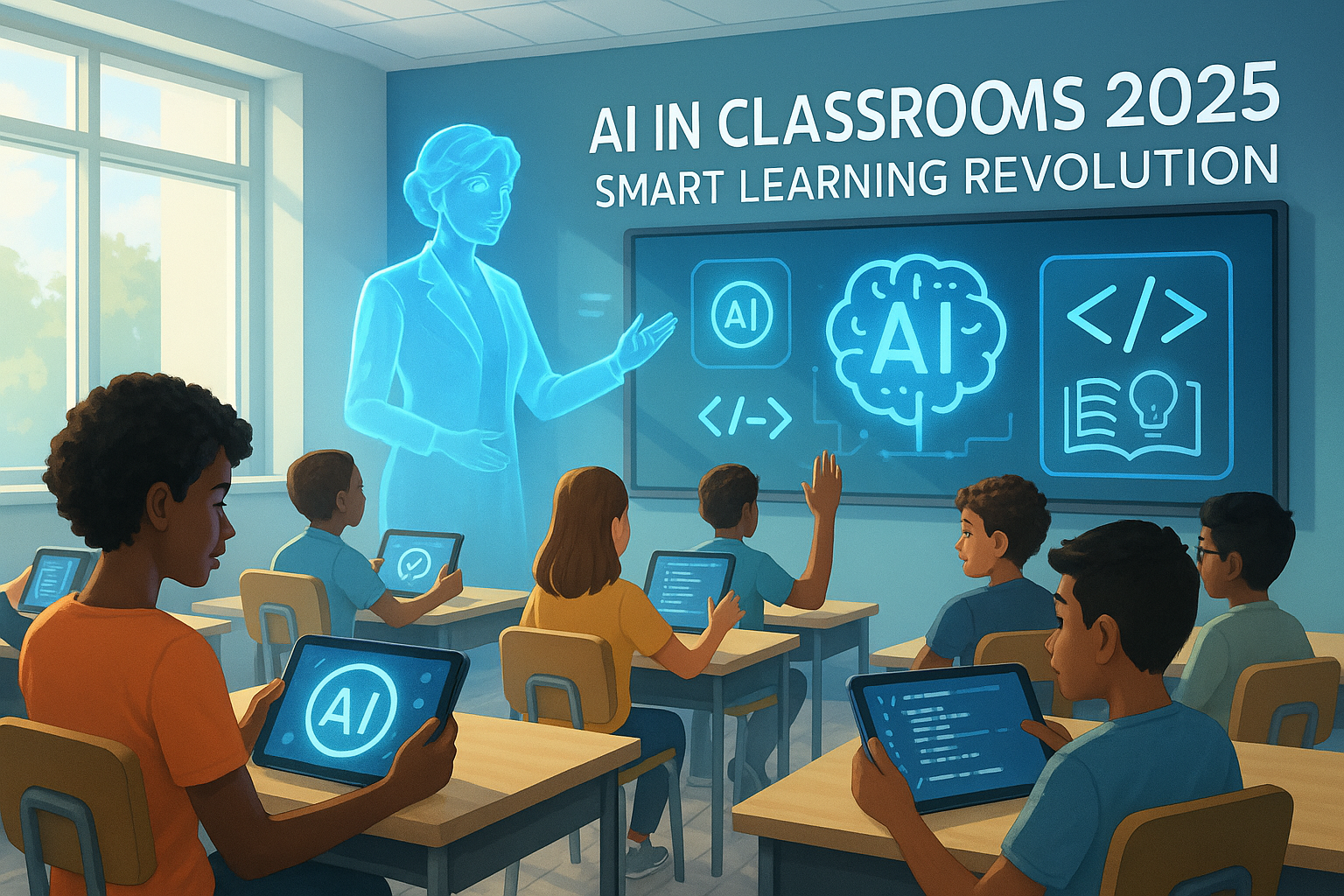
The classroom of 2025 is not what it used to be. Artificial Intelligence (AI) is transforming education by making learning personalized, interactive, and adaptive. From K–12 schools to universities, AI-powered tools are reshaping the way teachers teach and students learn. The days of one-size-fits-all education are giving way to smart learning environments that respond to individual needs, learning styles, and progress.
AI in education is more than just automation—it’s a revolution that enhances engagement, accessibility, and efficiency. In this blog, we’ll explore how AI is reshaping classrooms, the tools driving smart learning, benefits, challenges, and what to expect in 2025 and beyond.
1. Personalized Learning for Every Student
One of the most powerful applications of AI in classrooms is personalized learning. Every student learns differently, and AI can adapt lessons accordingly.
How it works:
- AI systems analyze student performance data
- Identify strengths, weaknesses, and learning patterns
- Provide tailored assignments, resources, and assessments
Benefits:
- Faster understanding of difficult concepts
- Focus on individual learning pace
- Reduces frustration and keeps students engaged
AI-driven adaptive platforms ensure no student is left behind, making education more equitable and effective.
2. Intelligent Tutoring Systems
AI-powered tutoring systems provide on-demand assistance to students outside traditional classroom hours.
Features include:
- Step-by-step explanations for difficult topics
- Interactive problem-solving sessions
- Immediate feedback on assignments
- Personalized recommendations for practice exercises
These systems act as virtual tutors, allowing teachers to focus on higher-level guidance while students get individualized support.
3. Automated Grading and Assessment
AI is revolutionizing grading and assessment, saving time and improving accuracy.
Capabilities:
- Grading essays, multiple-choice questions, and coding assignments
- Identifying patterns of student errors
- Providing detailed feedback with constructive suggestions
By automating routine grading, teachers can spend more time on teaching, mentoring, and creative classroom activities.
4. Enhancing Engagement with AI Tools
Classroom engagement is critical, and AI-powered tools make learning more interactive:
Examples:
- Virtual Reality (VR) & Augmented Reality (AR): Immersive lessons in history, biology, or science
- Gamification: AI-driven games that adapt to skill levels
- Chatbots & Voice Assistants: Answering student questions in real-time
- Interactive Simulations: Real-world scenarios in labs, business, or medical training
These technologies transform education from passive learning to experiential, interactive learning.
5. Supporting Teachers with AI
AI is not replacing teachers—it’s enhancing their role. Teachers can leverage AI for:
- Planning lessons based on student performance data
- Identifying students at risk of falling behind
- Designing personalized learning pathways
- Managing administrative tasks like attendance and scheduling
AI acts as an assistant, enabling more meaningful human interaction in classrooms.
6. AI for Inclusive Education
AI is a game-changer for students with diverse learning needs:
Applications:
- Speech-to-text for students with disabilities
- Language translation tools for multilingual classrooms
- Adaptive content for neurodiverse learners
- Accessible learning materials for visually or hearing-impaired students
This makes classrooms more inclusive, ensuring every student can participate and succeed.
7. Smart Classrooms: Connected Learning Environments
Smart classrooms combine AI, IoT, and cloud computing to create connected, data-driven learning spaces:
- Sensors track classroom environment, lighting, and noise for optimal focus
- AI analyzes real-time engagement metrics
- Digital whiteboards and collaborative platforms enable group learning
- Cloud-based platforms store progress and resources for teachers and students
These classrooms are dynamic, responsive, and tailored to maximize learning outcomes.
8. Preparing Students for the Future
AI in classrooms isn’t just about improving current learning—it’s about preparing students for the future workforce:
- Coding, AI, and robotics education
- Critical thinking and problem-solving skills
- Collaboration and creativity in hybrid or remote settings
- Ethical understanding of AI and technology
By integrating AI into education, schools are equipping students with digital literacy and skills for 2025 and beyond.
9. Challenges of AI in Education
Despite its benefits, AI integration comes with challenges:
- Data Privacy: Safeguarding student data from breaches
- Equity: Ensuring all schools have access to AI tools
- Teacher Training: Educators must learn to effectively use AI platforms
- Over-reliance: Avoiding excessive dependence on technology at the cost of human interaction
Addressing these challenges is critical to ensure ethical and effective AI-powered education.
10. The Future of Smart Learning
By 2025, classrooms will be highly adaptive and AI-driven:
- AI-powered platforms continuously assess and improve student learning
- Immersive technologies like AR/VR become mainstream for interactive learning
- Teachers become mentors and facilitators, focusing on human interaction
- Learning experiences are inclusive, personalized, and globally connected
The future of classrooms is flexible, smart, and student-centered, making education more effective and engaging than ever before.
Conclusion
AI is reshaping classrooms in ways that were once unimaginable. From personalized learning and intelligent tutoring to automated grading and immersive experiences, smart learning is becoming the new standard. By 2025, AI will not replace teachers—it will empower them, enhance engagement, and make education more inclusive, personalized, and effective.
Students, educators, and institutions embracing AI today are laying the foundation for a future where learning is dynamic, adaptive, and globally connected, preparing young minds for the challenges and opportunities of tomorrow.