
Introduction
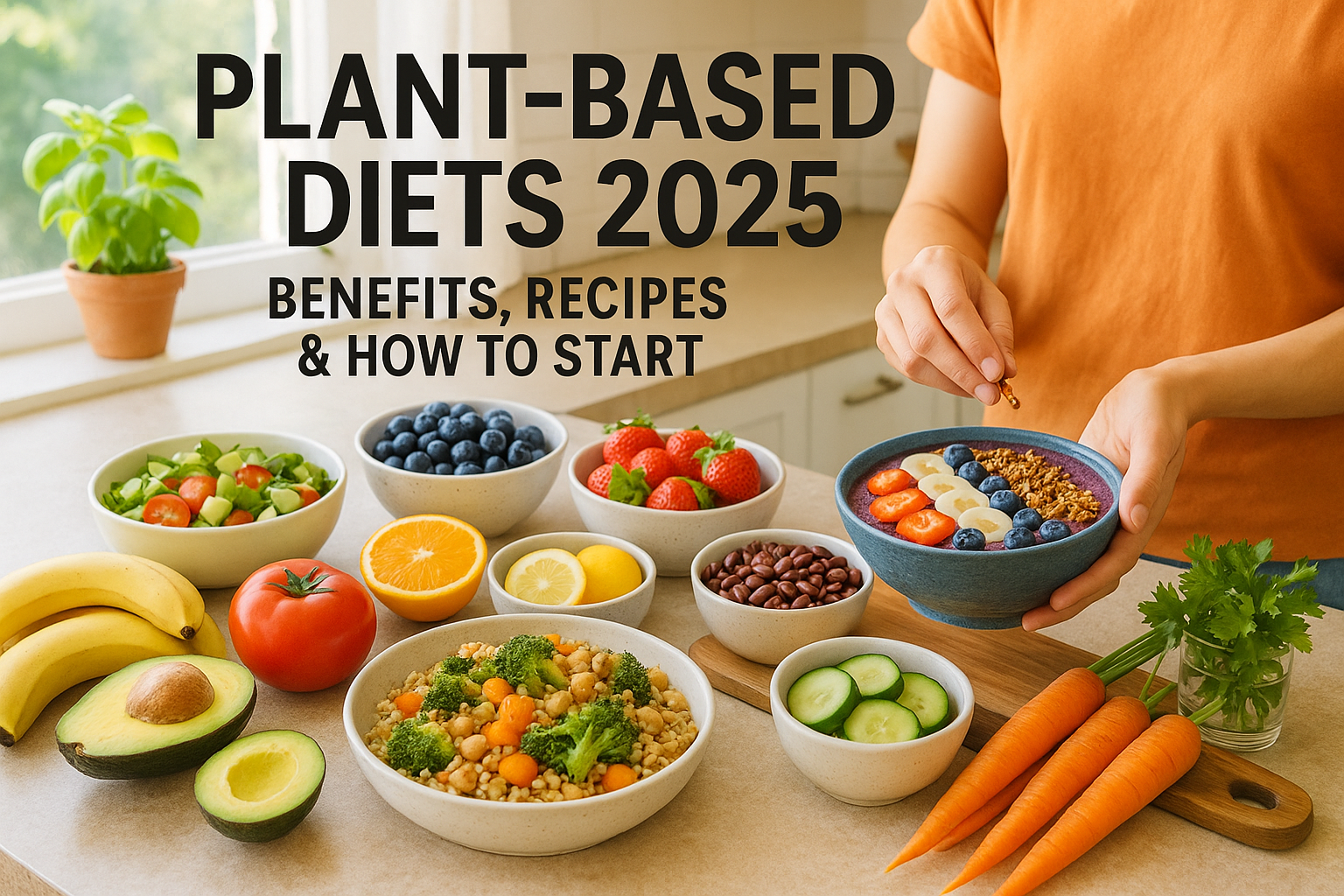
Plant-based diets are no longer just a trend—they’re a lifestyle embraced by millions worldwide for health, environmental, and ethical reasons. Focusing on fruits, vegetables, legumes, whole grains, nuts, and seeds, plant-based eating has been linked to improved energy, weight management, and disease prevention.
Whether you’re considering a full transition or just want to include more plant-based meals in your routine, this blog explores the benefits, meal ideas, and practical tips to start a plant-based diet in 2025.
1. What Is a Plant-Based Diet?
A plant-based diet emphasizes whole plant foods while minimizing or eliminating animal products. It’s not strictly vegan; some people may occasionally include small amounts of dairy, eggs, or meat, depending on personal preferences.
Core Components
- Fruits and vegetables
- Whole grains like quinoa, brown rice, and oats
- Legumes including beans, lentils, and chickpeas
- Nuts and seeds
- Plant-based proteins (tofu, tempeh, seitan)
The focus is on nutrient-dense foods that promote health, longevity, and environmental sustainability.
2. Benefits of a Plant-Based Diet
Plant-based diets offer multiple benefits for health, the planet, and overall well-being.
Health Benefits
- Heart health: Lower risk of heart disease due to less saturated fat and cholesterol
- Weight management: High fiber content promotes satiety and healthy digestion
- Diabetes management: Plant-based diets improve blood sugar control
- Cancer prevention: Increased antioxidants and phytochemicals support long-term health
- Gut health: Fiber and prebiotics feed beneficial gut bacteria
Environmental Benefits
- Reduced carbon footprint
- Lower water consumption compared to animal-based foods
- Less deforestation and biodiversity loss
Ethical and Social Benefits
- Support for animal welfare
- Encourages conscious food choices and sustainability
3. Common Myths About Plant-Based Diets
Many people hesitate to adopt plant-based diets due to misconceptions:
- Myth 1: Protein deficiency is inevitable
Reality: Legumes, nuts, seeds, tofu, tempeh, and whole grains provide ample protein. - Myth 2: It’s boring or tasteless
Reality: Plant-based meals are flavorful, colorful, and versatile. - Myth 3: It’s expensive
Reality: Beans, lentils, seasonal produce, and grains are affordable staples. - Myth 4: Nutrients are hard to get
Reality: With proper planning, you can meet all nutritional needs including calcium, iron, and omega-3s.
4. How to Start a Plant-Based Diet
Transitioning to a plant-based diet can be gradual or immediate, depending on comfort and lifestyle.
Step-by-Step Approach
- Start with small changes: Replace one meal a day with a plant-based option.
- Incorporate variety: Include colorful fruits, vegetables, grains, and legumes.
- Plan meals ahead: Use weekly meal plans to ensure balanced nutrition.
- Experiment with recipes: Try plant-based versions of your favorite dishes.
- Track nutrients: Ensure adequate protein, vitamin B12, calcium, iron, and omega-3.
Tips for Success
- Use plant-based cookbooks or online resources
- Explore plant-based protein powders if needed
- Meal prep to save time
- Connect with communities or forums for support and inspiration
5. Quick Plant-Based Breakfast Ideas
Start the day energized with simple, nutritious breakfasts:
- Overnight oats: Rolled oats with almond milk, chia seeds, and berries
- Smoothie bowls: Blend spinach, banana, protein powder, and top with nuts
- Avocado toast: Whole-grain bread, smashed avocado, and seeds
- Chia pudding: Chia seeds soaked in plant-based milk with fresh fruit
These breakfasts are ready in minutes, high in protein and fiber, and delicious.
6. Plant-Based Lunch Options
Lunchtime meals should be filling, balanced, and portable:
- Quinoa and chickpea salad: Quinoa, chickpeas, roasted veggies, and tahini dressing
- Vegan wraps: Hummus, beans, avocado, and greens in a whole-grain tortilla
- Buddha bowls: Brown rice, tofu, steamed vegetables, and a nut-based dressing
- Lentil soups: Hearty and protein-packed, perfect for batch cooking
Lunches can be prepped in advance and stored for quick access during busy days.
7. Easy Plant-Based Dinners
Evenings can feature satisfying, nutrient-rich meals:
- Stir-fried tofu and vegetables: Quick, flavorful, and customizable
- Vegan chili: Beans, lentils, tomatoes, and spices simmered together
- Stuffed bell peppers: Rice, beans, and vegetables baked to perfection
- Whole-grain pasta with veggie sauce: Tomato-based sauces with sautéed mushrooms, spinach, and garlic
Plant-based dinners are balanced, protein-rich, and comforting, suitable for families and individuals alike.
8. Plant-Based Snacks
Healthy snacks keep energy levels stable and prevent overeating:
- Fresh fruit with nut butter
- Roasted chickpeas or edamame
- Energy balls with oats, dates, and nuts
- Veggie sticks with hummus or guacamole
Snacks are easy to prepare and portable, supporting a consistent plant-based diet.
9. Supplementation and Nutrient Considerations
Some nutrients require attention on a plant-based diet:
- Vitamin B12: Often supplemented through fortified foods or tablets
- Iron: Found in lentils, beans, tofu, and spinach; pair with vitamin C for absorption
- Omega-3: Sources include flaxseeds, chia seeds, walnuts, or algae supplements
- Calcium & Vitamin D: Fortified plant-based milks, leafy greens, and sun exposure
Planning ensures you meet all nutrient requirements for optimal health.
10. Tips for Long-Term Success
- Gradually increase plant-based meals to avoid overwhelm
- Experiment with international cuisines (Indian, Mediterranean, Middle Eastern)
- Focus on whole, minimally processed foods
- Keep variety to maintain nutrient balance and avoid monotony
- Connect with online communities for recipes, motivation, and support
Consistency and creativity are key to enjoying a sustainable plant-based lifestyle.
Conclusion
Plant-based diets offer health, environmental, and ethical benefits while being flexible and delicious. By starting gradually, exploring simple recipes, and focusing on nutrient-rich foods, anyone can embrace a plant-based lifestyle in 2025. From energizing breakfasts and hearty lunches to satisfying dinners and healthy snacks, eating plant-based is practical, enjoyable, and life-enhancing.
Whether you aim to improve health, support sustainability, or explore new culinary horizons, plant-based eating is a powerful choice for a modern, conscious lifestyle.